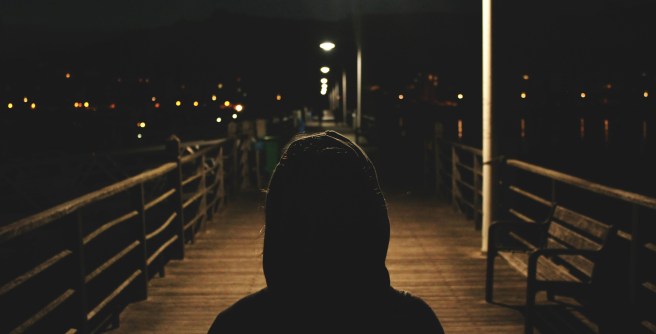
Even though this website focuses on general relationship problems, and I am by no means a professional in protection against stalking, I believe we should address the subject of stalking, and how we could possibly be helping a perpetrator without even knowing. So let’s talk about it.
There are numerous misconceptions about stalkers. One significant misconception is that all stalkers are socially awkward and creepy. Many wouldn’t believe that a tall, handsome man, in good shape, wearing stylish clothes, and speaking politely and eloquently, could be a stalker.
The same holds for women. Most people find it challenging to conceive that a woman could be a stalker at all. To complicate matters further, would you ever consider a girlish, frail-looking 20-year-old who also appears very shy to be a stalker? I can guarantee you that the vast majority of people would not be able to grasp the idea of that being remotely possible.
The thing is, anybody – and I mean ANYBODY – could be a stalker. Skin color, height, weight, age, social status, or even the level of education does not matter. You could look up information about who is most likely to be one, but that’s it – just a likelihood. Exceptions still exist, and they also cause damage. Moreover, statistics only show what has been reported. Many people are currently being stalked and are not telling anybody about it, and some victims don’t even realize they are being stalked. Not reporting doesn’t mean they aren’t suffering or in danger. Not knowing right now doesn’t mean they won’t find out in the future. Many stalkers linger in the shadows for a while before getting noticed.
With all that being said, what would you do if a good-looking person asked you about your friend’s location or some other sensitive information? The victim doesn’t have to be your friend; it could be your fellow student, your customer, or your neighbor.
Let’s stick with the random name Anna for the rest of this article to simplify things, but remember that Anna could also be Adam. All genders and people of all ages are susceptible to stalking. For illustration purposes, we’ll assume the stalker is a man, but it could be a woman too.
“I lost Anna’s phone number, can you give it to me? I need to talk to her.”
“Do you know Anna’s new address? I knocked on her door and someone else opened it. They said she doesn’t live there anymore.”
“I didn’t know Anna’s married! Who’s the lucky guy?”
“Is my friend still studying here? I can find her. Her name is Anna.”
Answering any of these seemingly innocent questions could provide a stalker access to his or her victim, potentially reigniting a nightmare for someone who managed to escape them.
You don’t have to ignore the person. After all, you don’t know if this particular individual has ill intentions or not. However, here are some simple steps that could help prevent stalking behavior in our society:
1. In case you can’t tell if the person knows you are friends with or you have information about the other person, tell them you don’t know, and ask them for their name, e-mail, or cellphone in case you find something out (if you think it’s necessary and/or you think Anna might want to contact this person who is looking for her):
“Hey, does Anna take some classes with you? She’s kinda tall and has long brown hair. I studied with her in high school…” “Hm, can’t remember” (if the person doesn’t ask for any information other than that, this should be enough) Make sure to tell your friend/acquaintance about this situation.
However, if the question is:
“Hey, does Anna take some classes with you? She’s kinda tall and has long brown hair. I studied with her in high school, I need to talk to her about —… Do you have her phone number or something?”
“Hm, I’m not sure if I know her. I’ll pay attention next time I’m in class. If I see her, do you want me to give her your name/phone number/email so she can reach out?”
Then talk to Anna about this person, and see if she wants to share her information with him or if she wants the contact information. Make sure to tell Anna what this person looks like. Keep in mind that this person could be impersonating someone else.
Why should you be vague when you can: If the stalker doesn’t know where Anna is studying, for example, he might look for possibilities and even ask strangers for information. Some stalkers go specifically for people who would be unaware of anything that is going on. If you think about it, this makes complete sense.
2. If the person is sure about you being friends (or having some other type of connection) with this person, you’ll have to be more blunt:
“Hey, I saw that you work with Anna. She studied with me in high school. I need to get in touch with her; can you give me her phone number? I lost it.”
“Sorry, I don’t give information without consent. I’ll ask her about it. Can you give me your name and some way she can reach out to you?”
The same goes here, talk to Anna about the incident and tell her what this person looks like.
3. “I heard/saw that Anna is dating a new guy. What’s his name?”
If you want (and have) the opportunity to pretend that you don’t know, do that. However, you can also be blunt about it and say that you don’t give information without consent.
Sometimes, stalkers go for information about their victim’s romantic partners. Some victims, unable to hide themselves for whatever reason, conceal information about their partners to avoid not only giving the stalker more content to look up but also to protect these people. It’s not unheard of that stalkers sometimes harass potential or present partners of the victim.
—–
Another important thing to keep in mind is that the stalker doesn’t have to be a stranger. The stalker could be, for example, a friend in common, or even a family member.
Remember, just like with any other criminal offense, it’s not because this person is your friend that they can’t commit the act of stalking. We tend to think that people close to us are unable to do terrible things. The truth is, at least most criminals out there have friends and family.
Why should I be this careful?
Think about it this way: If you are not close to Anna, you might not know everything that is going on in her life. Also, she could be the quiet type and might not be willing to tell everybody about this situation. Some victims do not share this type of information at all.
But what about social media? It’s not like the stalker couldn’t get this information otherwise… Should I take all of this so seriously?
Let’s say that Anna has a way of communication, perhaps a private Instagram account. If Anna supposedly knows this person, why can’t he (or she) simply ask her those questions directly? That’s a question you should ask yourself. The second possibility is: If Anna doesn’t have any way to be found (at least easily or at all) on the internet, maybe it’s because she does not want to be found.
Simply put, never share any sensitive information about someone else without their consent, no matter who asks for it. Obviously, you’d never do that (or at least I hope you wouldn’t) on purpose, but sometimes, if we don’t keep this in mind, we might let things slip without even knowing how dangerous that could be.
 The Advice Corner